

08 Oct 2026
From Deepfakes to Paper Directors: Inside the New Generation of Fraud
A customer can pass an identity check. A company can have real directors. A payment can be properly authenticated. But none of those signals, on their own, necessarily reveal who is behind the activity or why it is taking place.
That challenge becomes more significant as fraud moves beyond stolen credentials and isolated scams. Social-media recruitment, AI, deepfakes, encrypted messaging and the use of genuine people to provide apparent legitimacy are expanding the ways fraudulent activity can reach financial institutions.
Investigative reporter Kaf Okpattah has spent months inside this changing environment, from social-media fraud influencers and teenage scam networks to bank-cloning software. His investigations, including those documented in his book Scam Nation: Inside the New Fraud Playbook, raise a broader question: are financial crime controls keeping pace with the infrastructure developing around modern fraud?
Fraud Is Becoming More Than the Individual Scam
For decades, scammers have often been thought of as rogue actors: offshore con artists or opportunistic criminals targeting people for their money or identities.
Scam Nation, written by Okpattah, presents a changing picture. Drawing on his frontline investigations, the book examines a new generation of fraudsters using artificial intelligence, encrypted messaging and social-media platforms alongside deepfake calls, psychological manipulation and advanced money-laundering techniques.
His reporting has taken him from sophisticated bank-cloning software operations to international teenage scam networks. The shift is therefore not only in the sophistication of individual scams, but in the environments through which people can encounter and participate in fraud.
This creates a problem earlier in the fraud journey than the transaction itself.
Social Media Can Sit on Both Sides of the Fraud
Social media is commonly associated with the victim side of fraud. But Okpattah’s investigations show another part of the picture.
In an undercover investigation for the BBC’s Panorama, he exposed anonymous social media fraud influencers drawing young people into shadow economies. Social platforms can therefore form part of the environment through which people are drawn into fraudulent activity, not simply the technology through which a scam reaches its victim.
For financial institutions, this creates a more complicated question about the person who eventually appears within an account, company or transaction: are they directing the activity, or are they one part of something larger?
That question becomes particularly important when the activity reaches KYC.
What Happens When the Person Passing KYC Is Real?
A stolen or fabricated identity presents one type of detection problem. A genuine person being used to provide legitimacy presents another.
Okpattah’s investigation into the changing frontier of cyber-enabled fraud includes the grooming of paper directors and paper boards through social media to dupe KYC checks by law firms and financial institutions.
Establishing that an identity is genuine does not necessarily establish who is controlling the activity behind it. The person being verified may exist, and the information presented may appear legitimate, while leaving questions about why that individual is there and what sits behind the relationship.
The challenge therefore moves beyond identity alone towards the relationship between identity, control and behaviour. Technology adds another layer.
AI Is Changing More Than the Scam Message
Artificial intelligence is increasingly associated with individual fraud techniques such as deepfakes. But the wider combination of technologies available to fraudsters presents a broader challenge.
Scam Nation examines an environment in which AI, deepfake calls, encrypted messaging, social-media platforms and psychological manipulation can form different parts of the fraud playbook.
The issue is therefore not simply whether one AI-generated interaction can be identified. As the tools available to create convincing communications and interactions develop, the wider context surrounding an identity becomes increasingly important.
Does the activity surrounding the identity support the story being presented?
That becomes particularly important when the individual visible to an institution may not represent the wider network behind the activity.
The Person You See May Not Be the Network You Are Looking For
Okpattah’s reporting on social-media fraud influencers and international teenage scam networks highlights another complication: the person visible to an institution may represent only one part of a wider operation.
His investigation into the grooming of paper directors extends that problem into the corporate environment. The question becomes less about whether an individual appears suspicious in isolation and more about what relationships, behaviours and activity sit around them.
This is where different financial crime controls can begin to see different parts of the same activity.
The Fraud May Be Visible Across Different Controls
KYC may establish the identity, while fraud controls identify deception or unusual behaviour. Transaction monitoring may detect the movement of funds, while AML investigations uncover relationships between accounts, companies and beneficiaries.
Each function can therefore encounter a different part of the activity, while the network itself operates across those boundaries.
The journey can look more like:
Social Media → Recruitment → Identity → KYC → Accounts → Fraud → Money Movement
Viewed individually, each stage provides only part of the picture. Connecting them can provide greater visibility into the infrastructure surrounding the fraud before and after the transaction.
Detecting the fraudulent transaction may therefore be only one opportunity to identify the activity behind it.
Are Controls Following the Fraud?
If social media can draw people into fraud, genuine individuals can be groomed as paper directors, and technologies such as AI and deepfakes can strengthen deception, where should detection begin?
The answer may not sit within one control. KYC can establish identity, fraud teams can identify suspicious behaviour, transaction monitoring can follow money movement, and AML investigations can connect accounts, companies and beneficiaries.
The operational challenge is whether those different views can build a sufficiently connected picture of the activity surrounding the customer.
The fraud playbook is changing. The question is whether the controls looking for it can see enough of that change.
The New Generation of Fraud
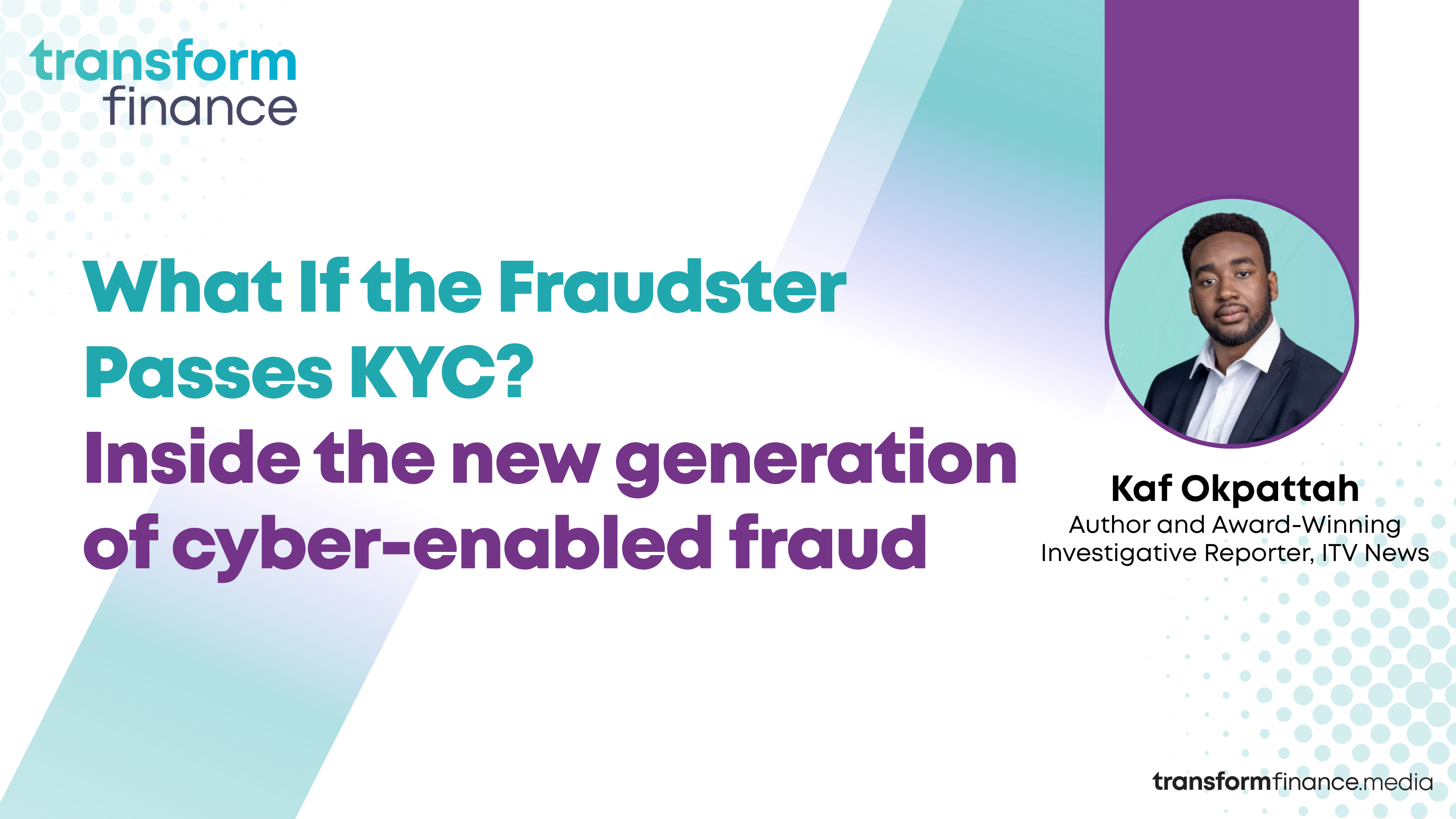
On 22 October 2026, Kaf Okpattah, author of Scam Nation: Inside the New Fraud Playbook, award-winning investigative reporter for ITV News and the youngest-ever writer and presenter of the BBC’s Panorama, will take to the Main Stage at the 3rd Annual Fraud & Scams Leaders Summit UK at The Tower Hotel, London.
In The New Generation of Fraud, he will explore the changing frontier of cyber-enabled fraud from consumer to corporate level, including the grooming of paper directors and boards through social media to dupe KYC checks by law firms and financial institutions.
What happens when the person passing the control looks legitimate, but the activity behind them is not?
Join us in London as we examine what the new generation of fraud means for the controls designed to detect it.
🎟️ Register now using invite code: VIP-A to claim your complimentary delegate pass.
We look forward to seeing you in London!