

17 Nov 2026
Financial Crime Operations at a Crossroads: The Priorities Shaping 2027
An AI agent reviews an alert, retrieves customer information, drafts an investigation summary, and recommends the next action. The process that once took an analyst considerably longer is completed in minutes.
But the customer data is incomplete. The fraud team holds information the AML team cannot access. Another institution has identified related activity, but that intelligence has not reached the investigator.
The investigation is faster. Is it any better?
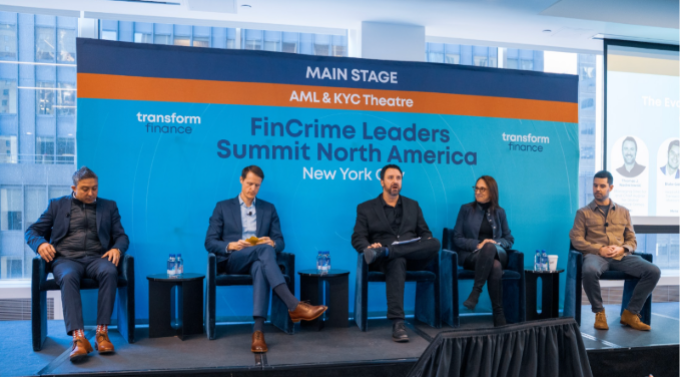
This tension ran through discussions at Transform Finance’s 6th Annual FinCrime Leaders Summit North America, held in New York on November 17, 2026.
As institutions experiment with agentic AI, reconsider traditional investigative structures, and move toward continuous risk assessment, a more fundamental question is emerging: are financial crime operating models being transformed, or are existing limitations simply being automated?
The discussions exposed five interconnected pressures:
- AI: Automation is advancing faster than the systems and governance supporting it.
- Criminal networks: Financial crime is increasingly interconnected, while investigations remain divided by risk category.
- Intelligence sharing: Relevant information exists, but delays and fragmented reporting limit its investigative value.
- Investigations: AI could change the traditional three-tier model, raising questions about the future of analyst development.
- Continuous compliance: Periodic controls are struggling to reflect risks that change between scheduled reviews.
Each raises a different operational question. Together, they reveal why improving individual capabilities may not be enough to improve financial crime outcomes.
AI: Are We Automating the Same Problems Faster?
One of the more direct concerns raised in New York was the risk of introducing AI agents into fragmented compliance environments. Where data remains disconnected, investigative processes are inconsistent, or governance is poorly defined, automation can accelerate existing weaknesses rather than resolve them. An AI agent may complete a task faster, but it cannot independently compensate for information it cannot access or relationships that existing systems fail to recognize.
The discussion also revealed how uneven AI adoption remains. Much of the activity described involved administrative work, investigative summaries, and narrative drafting. Some institutions are extending AI into quality assurance, testing, and the analysis of customer activity, but fully agentic investigative workflows remain relatively uncommon. The distinction matters because automating individual tasks is different from coordinating an investigation across multiple systems and sources of intelligence.
Governance was another recurring concern. Institutions are exploring increasingly autonomous capabilities while continuing to address weaknesses in their underlying control environments. Data quality, decision rights, accountability, and human oversight become more difficult to manage when AI is introduced across workflows that were not designed to operate together. Without clear governance, greater automation can make it harder to establish how a conclusion was reached or determine who remains responsible for the outcome.
This raises a question for institutions investing in AI-enabled investigations: are they redesigning how intelligence is connected and assessed, or simply reducing the time required to complete existing processes? That distinction becomes particularly important when the activity being investigated extends beyond a single transaction, account, or risk category.
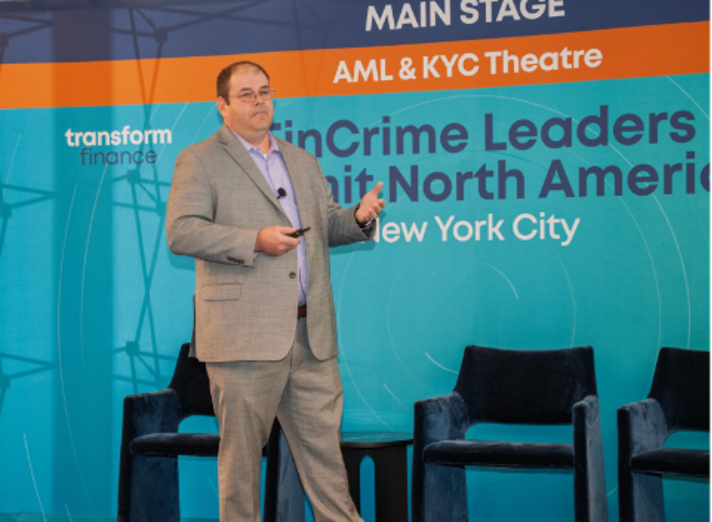
Criminal Networks: The Activity Is Connected. Are the Investigations?
A recurring theme in New York was the growing convergence of fraud, money laundering, sanctions exposure, cybercrime, and human exploitation. Criminal operations increasingly involve several of these activities simultaneously, while financial institutions continue to investigate them through separate functions, systems, and reporting processes. The resulting fragmentation can leave investigators examining different components of the same criminal operation without establishing the relationships between them.
Discussions also challenged conventional assumptions about the characteristics of professional money laundering. High-value transfers are not necessarily the defining feature. Smaller transactions, less familiar financial products, and activity that appears relatively low risk can form part of a larger operation. Certificates of deposit were among the products discussed, demonstrating how criminal methods can extend beyond the transaction patterns institutions typically associate with money laundering.
AI-enabled fraud further complicates this assessment. Applications and transactions that previously displayed recognizable indicators of manipulation may now appear increasingly credible. At the same time, low-value activity may become significant when connected across accounts or accumulated over time. An individual transaction may not justify escalation, while the relationships between several transactions could reveal a substantially different risk profile.
The implications extend beyond improving transaction monitoring rules. If fraud, AML, and sanctions teams are investigating different aspects of the same operation, who is responsible for connecting the intelligence? And when those connections extend beyond the institution, the question becomes even more difficult: how can investigators establish the wider network when relevant information is held elsewhere?
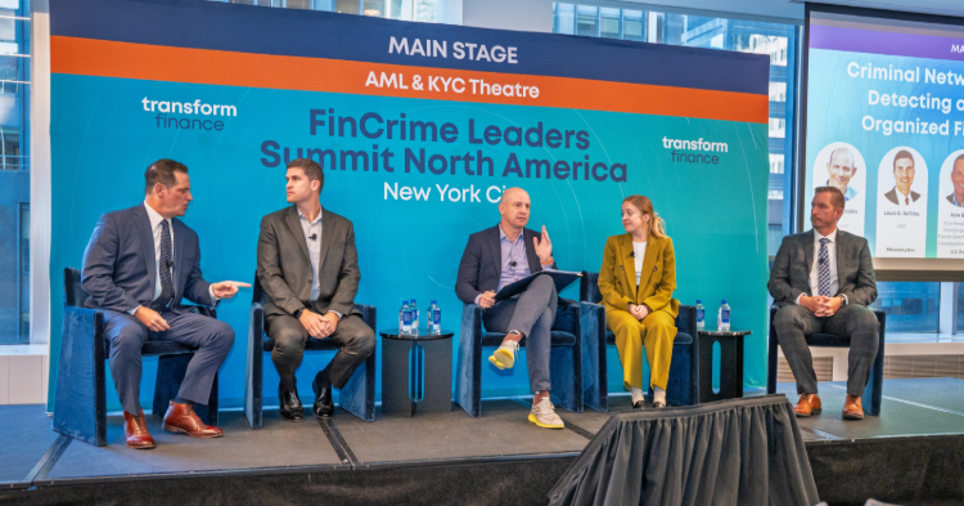
Intelligence Sharing: The Information Exists. Can It Reach the Right Investigation?
The limitations of information sharing became particularly apparent in discussions about the speed of criminal activity. Financial institutions may hold different parts of the same investigative picture, but the processes used to exchange information can move considerably more slowly than the funds themselves. Section 314(b) requests were identified as an example of arrangements that can be too slow for rapidly developing investigations, particularly when suspicious activity involves multiple institutions.
The discussions also challenged the assumption that effective intelligence sharing should be limited to traditional public-private partnerships. Non-governmental organizations can contribute specialized knowledge that helps institutions interpret unusual activity, particularly where criminal operations involve exploitation, complex networks, or activity that is not readily understood through financial transactions alone. Such intelligence can provide context that conventional monitoring systems may not capture.
However, receiving additional intelligence does not automatically improve an investigation. The discussion around suspicious activity reports (SARs) emphasized the importance of moving beyond monitoring system outputs to explain the relationships between accounts, entities, transactions, and potential criminal networks. A report may contain extensive transactional detail while providing limited insight into how the activity fits into a wider operation. Clear narratives and well-developed investigative findings can make the information more useful to law enforcement.
This shifts attention from the volume of intelligence exchanged to its operational value. Can institutions identify the relevant connections, communicate them clearly, and provide sufficient context for law enforcement to prioritize further investigation? A suspicious transaction may justify a SAR. But what would it take for that report to help uncover the network behind it? The answer depends partly on the investigative capabilities available before the report is filed.

Investigations: Does the Three-Tier Model Still Make Sense?
One of the more provocative questions raised in New York concerned the future of the traditional three-tier investigative model. If AI can undertake preliminary investigative work, consolidate relevant information, assess customer activity, and prepare case summaries, does the industry still need the same structure for reviewing and escalating alerts? The question moves beyond improving analyst productivity toward reconsidering how investigative responsibilities should be distributed.
For institutions operating high-volume alert review processes, the implications could be substantial. AI-enabled workflows may reduce the amount of routine work performed during initial investigations, allowing experienced analysts to concentrate on complex cases and network analysis. However, simply removing tasks from the first level of review does not necessarily create a more effective investigative model. Escalation criteria, accountability, evidence quality, and the relationship between automated findings and human decisions would also need to be reconsidered.
A less obvious concern emerged around the development of investigative judgment. Junior analysts have traditionally gained experience by reviewing alerts, examining customer activity, recognizing suspicious patterns, and learning when an apparently routine case warrants further investigation. If AI increasingly performs this preliminary work, institutions may lose an important environment in which those skills are developed. Future investigators will still need to identify missing context, challenge automated conclusions, and recognize when the available evidence does not support a proposed outcome.
The question is therefore not simply whether AI can replace first-level investigative tasks. It is how institutions will develop experienced investigators when the work that once trained them is increasingly automated. That has implications for recruitment, training, supervision, and the design of future financial crime teams. It also connects directly to another discussion in New York: whether the traditional periodic approach to managing financial crime risk remains appropriate.
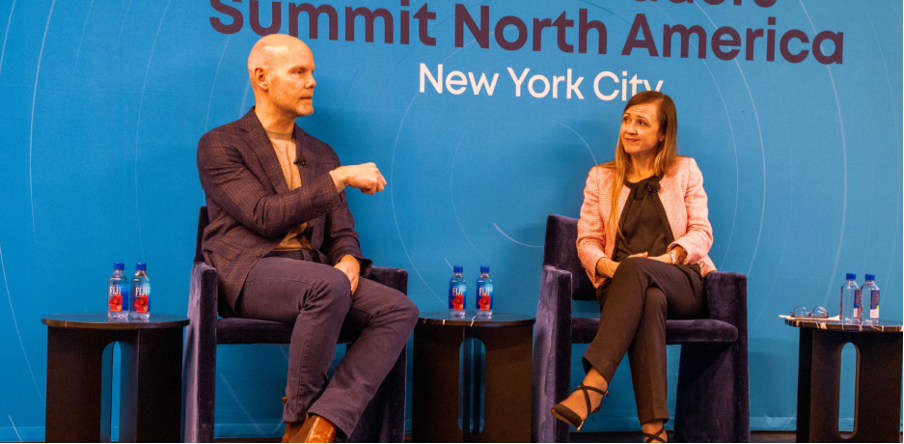
Continuous Compliance: Risk Changes Between Reviews
Periodic risk assessment assumes that changes in customer exposure can be identified and addressed through established review cycles. Yet customer behavior, transaction patterns, external intelligence, and associated risks can change considerably between those assessments. Discussions in New York examined the limitations of this approach and the need to move toward more continuous, intelligence-led compliance operations.
The transition is more complex than increasing the frequency of customer reviews. If information remains distributed across KYC, transaction monitoring, sanctions, and investigative systems, more frequent assessments may still rely on incomplete context. An institution could identify a change in transaction behavior without incorporating related intelligence held elsewhere, or update a customer risk assessment without that change influencing relevant monitoring and investigative decisions.
AI-enabled workflows may help address some of these limitations, particularly where coordinated systems can share information and maintain context across different stages of the compliance process. However, discussions emphasized that isolated AI agents do not necessarily create an integrated operating model. Effective coordination requires reliable data, consistent governance, clearly defined decision rights, and appropriate human oversight. Institutions must also be able to demonstrate how changes in risk influence subsequent actions.
This creates a different measure of effectiveness for continuous compliance. How quickly can new information change an institution’s understanding of risk, and how quickly can that understanding influence a decision? A more responsive approach depends not only on detecting changes, but on ensuring that the relevant intelligence reaches the controls and people responsible for acting on them.
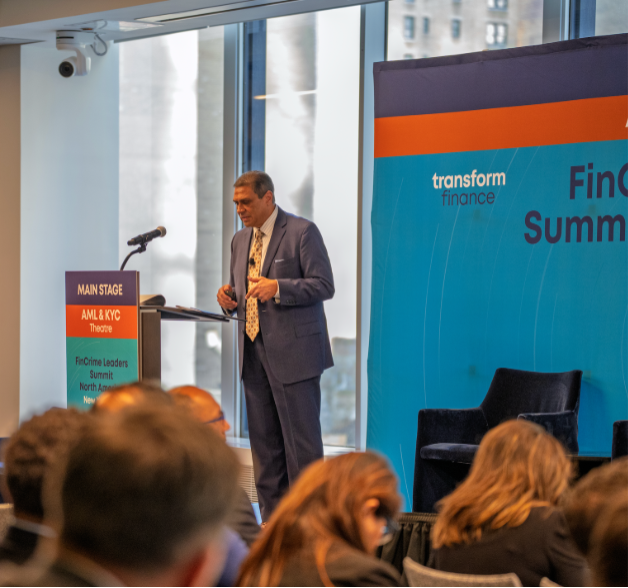
Five Pressures. One Operating Model Under Scrutiny.
The discussions in New York covered different technologies, criminal methods, and operational priorities, but their implications repeatedly converged on the same issue: the ability of financial crime functions to connect information, expertise, and decisions.
AI can accelerate investigative processes, but disconnected data may limit the conclusions those processes can produce. Criminal networks operate across risk categories, while institutions frequently investigate activity within separate functions. Intelligence sharing can reveal connections beyond an institution’s immediate visibility, but delays and incomplete narratives can reduce its usefulness. Meanwhile, greater automation may change the structure of investigations without resolving how professional judgment will be developed and maintained.
Continuous compliance introduces another dimension. As institutions seek to respond more quickly to changing risks, the effectiveness of their controls increasingly depends on whether information can move between systems and influence decisions without waiting for established review cycles.
These pressures ultimately converge around a connected process:
Data → Intelligence → Investigation → Intervention
Weaknesses at any stage can limit the effectiveness of what follows. Better data does not guarantee meaningful intelligence. More intelligence does not automatically produce stronger investigations. And identifying suspicious activity does not necessarily result in intervention against the wider criminal operation.
What New York Leaves Financial Crime Leaders to Consider
The 6th Annual FinCrime Leaders Summit North America highlighted a growing tension between the capabilities financial institutions are developing and the operating models through which those capabilities are deployed.
The discussions did not suggest that AI, information sharing, or continuous monitoring would independently resolve the limitations of existing financial crime controls. Instead, they exposed how improvements in one area can remain constrained by weaknesses elsewhere.
For institutions considering their next phase of transformation, the questions are increasingly operational. Can AI access the information needed to support meaningful investigations? Can fraud, AML, and sanctions intelligence be connected? Are SARs providing law enforcement with sufficient context? And can investigative teams maintain the expertise required to challenge automated decisions?
Perhaps the more difficult question concerns how institutions define progress.
If AI processes more alerts, investigations are completed faster, and suspicious activity is identified earlier, but the wider criminal network remains operational, what has actually improved?
That question captures much of the discussion in New York and the considerations financial crime leaders will carry into 2027.
As institutions continue to rethink how they detect, investigate, and disrupt financial crime, these conversations will extend well beyond the summit. Through FinCrime Fighters, we will continue exploring the developments, industry perspectives, and practical challenges shaping the next phase of financial crime operations.
Join FinCrime Fighters to stay part of the conversation.
This article is part of Transform Finance's coverage of the 6th Annual FinCrime Leaders Summit North America, New York 2026.